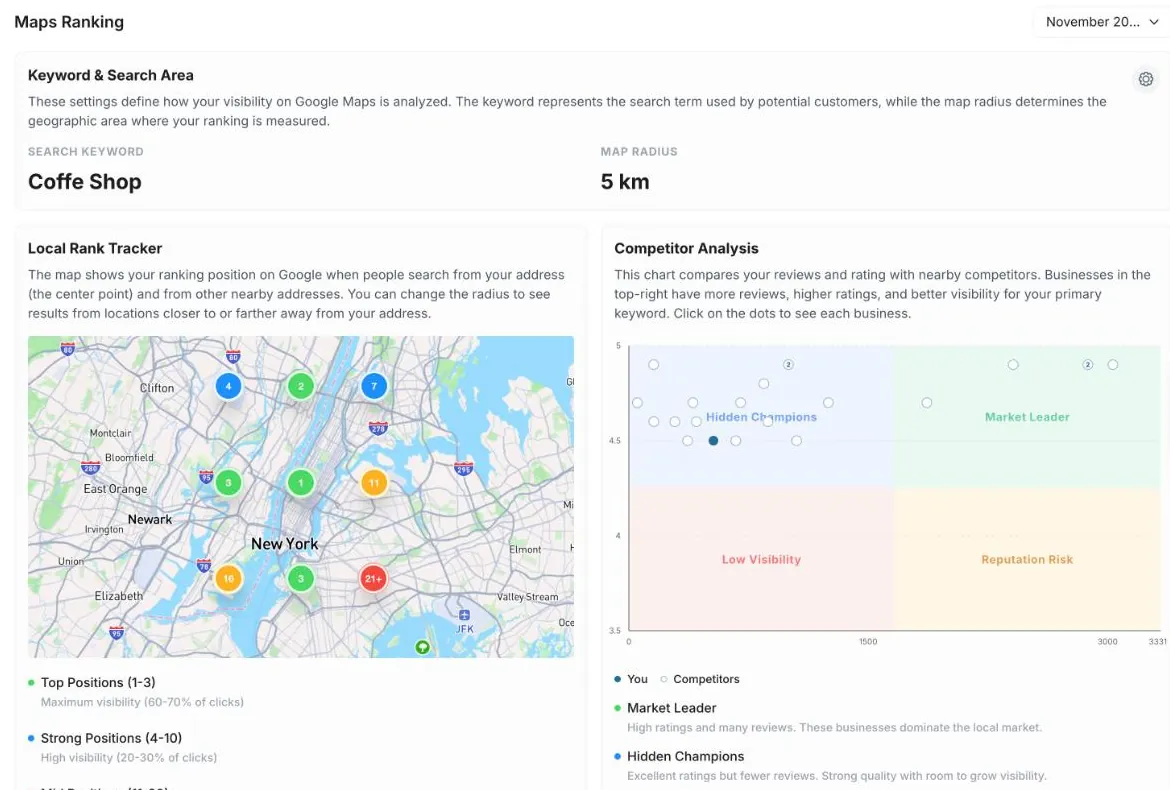
"What's a good coffee shop near Union Square that's quiet enough to work?" More people now type questions like this into ChatGPT, Gemini, Perplexity or Grok instead of Google. The answer usually names two or three businesses. If you are not one of them, that customer never sees you.
How AI tools choose which businesses to mention
Each tool works differently and none of them publishes a full recipe, so be wary of anyone promising guaranteed results. What they have in common: they build an answer from information they can find and trust about your business. In practice that means:
- Clear, consistent business details (name, address, phone, hours, services) on your Google profile, website and directories.
- Reviews, especially what reviewers actually say. "Quiet, fast wifi, great flat white" is exactly the kind of detail that matches a specific question.
- Useful content about you and your area, such as a page or article that explains what you are known for.
What you can do this month
- Fix your basics. Make sure your details match everywhere.
- Get reviews that describe the experience. Asking every customer brings in more detailed reviews than waiting.
- Publish content based on what customers praise. If reviews keep mentioning your almond croissants, write about them.
- Track it. Ask the same question every month and see whether you appear.
How Localena helps
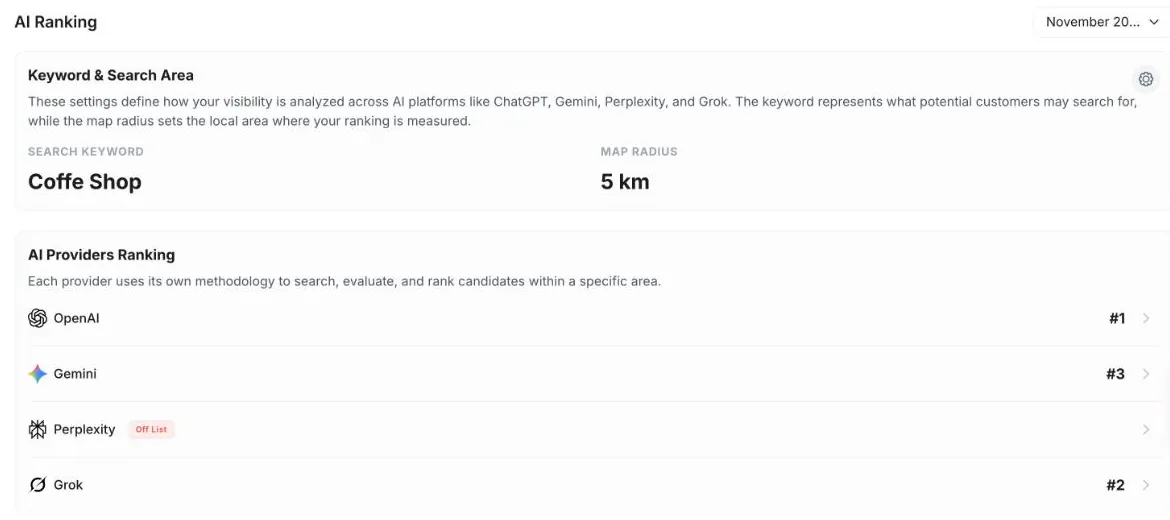
The AI ranking screen tracks your position for a chosen keyword in your area on ChatGPT, Gemini, Perplexity and Grok, month by month. "Off list" means that tool did not mention you at all, which is useful to know too.
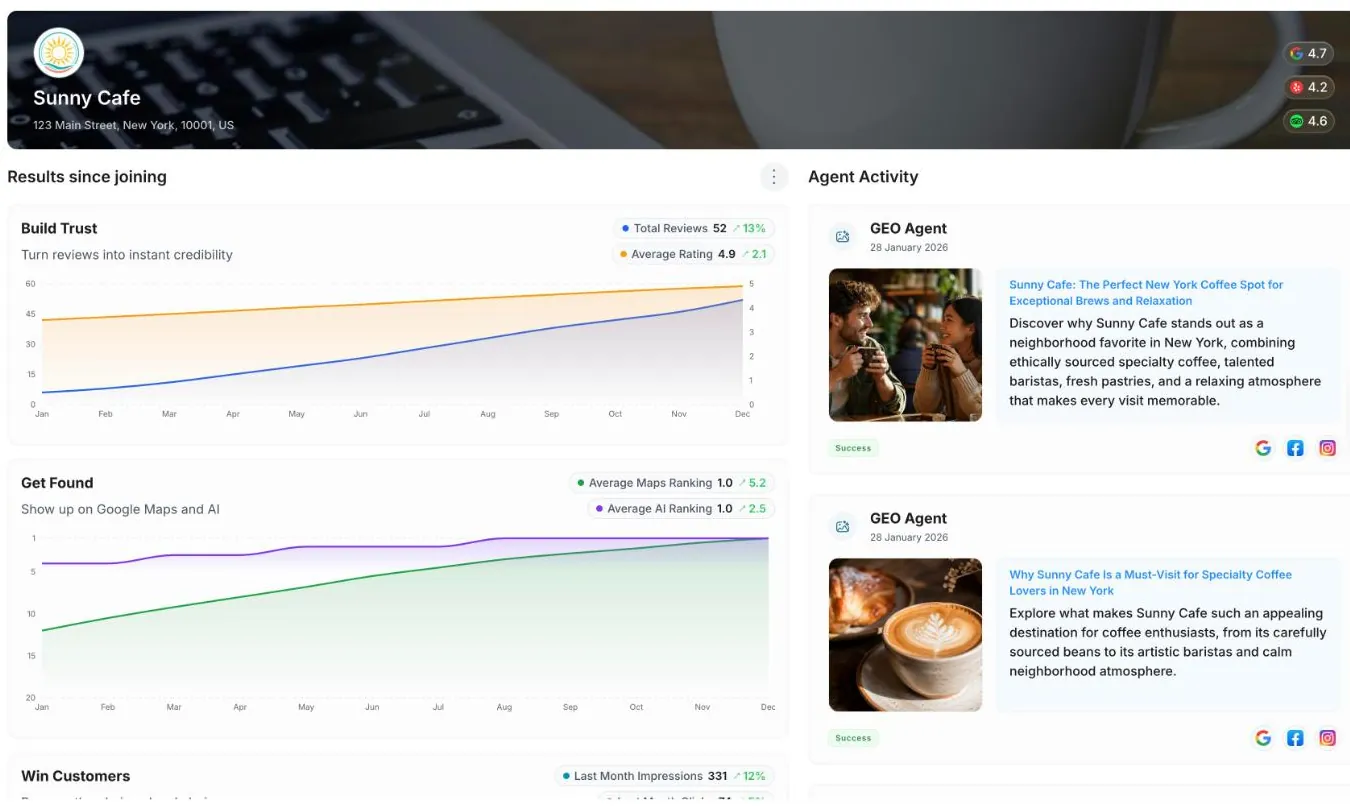
The GEO agent (GEO stands for generative engine optimisation, a newer name for this kind of work) writes local articles based on the themes in your reviews, for your website and social pages. It gives AI tools more clear, accurate information about you to draw on.
AI visibility is included in the Pro plan. It is still a new field, so we show you the tracking honestly, month by month, rather than promising a position.